Sunny City Swing
Sunny City Swing


Swing Dance Styles
A closer look at the dances we teach — from Lindy Hop to Blues

6-Count Swing
6 Count Swing is the entry point into the world of swing dancing It’s doable, fun, and the perfect place to start.
It introduces the classic 6‑count rhythm, comfortable partner connection, and the playful movement quality that defines swing. Dancers get a solid foundation that makes every other swing style easier to explore.
-
Easy-to-learn rhythm that gets you moving right away
-
Comfortable partner connection that feels natural and relaxed
-
Beginner-friendly patterns that build confidence on the social floor

Lindy Hop
Lindy Hop is the original swing dance — rhythmic, expressive, and full of joy. Created by the African American community in Harlem in the early 20th century, it carries the energy of the Savoy Ballroom and the vibrant jazz culture of the 1930s and 40s. It’s playful, improvisational, and deeply connected to the music.
-
8‑count rhythm that gives the dance its signature flow
-
The Swing Out — the iconic move at the heart of Lindy Hop
-
A blend of structure and freedom that lets dancers express their own style
Lindy Hop is dynamic, musical, and endlessly fun — a dance that continues to inspire generations.

Lindy Charleston
Lindy Charleston blends the lively footwork of 1920s–30s Charleston with the partnered flow of Lindy Hop. Charleston is an integral part of Lindy Hop, shaping its rhythm, energy, and many of its most iconic patterns. Rooted in the same African American jazz traditions, it brings a burst of kicks, drive, and rhythmic play into the Lindy Hop vocabulary.
-
Signature Charleston kicks that add drive and personality
-
Seamless transitions between Charleston and Lindy Hop
-
Historic movement roots that connect dancers to early jazz culture
You can see this evolution in vintage footage — dancers like Shorty George Snowden and Little Bea moving from closed Charleston into the breakaway, one of the earliest moments where Lindy Hop begins to emerge.
Watch the clip: https://www.youtube.com/watch?v=LcnpZfsfwDA

Collegiate Shag
Collegiate Shag is a high‑energy partner dance from the 1930s, danced to mid‑ and uptempo jazz from the swing era. It’s instantly recognizable for its lively footwork, upbeat rhythm, and bold personality. Shag always grabs attention on the dance floor — known for its fancy footwork, playful shapes, and fun, flamboyant patterns.
-
Fast, rhythmic footwork that gives the dance its signature bounce
-
Expressive patterns that feel joyful, bright, and full of flair
-
A perfect skill for swing dancers who want more options for faster tempos
It’s vibrant, athletic, and a fantastic way to add spark and variety to your social dancing.

Balboa
Balboa emerged in the crowded ballrooms of Southern California in the 1920s and 1930s, shaped by fast swing music and the need for smooth, efficient movement. It’s known for its subtle footwork, relaxed posture, and effortless glide.
Often danced in a close embrace, Balboa creates a calm, floating feeling as partners move together with compact shuffles, turns, and rhythmic variations. Its understated elegance makes it a favorite for dancers who enjoy fast tempos without high‑impact movement.
-
Smooth, compact footwork that feels effortless even at fast speeds
-
Close‑embrace connection that creates a calm, floating quality
-
Classic turns and variations that add texture without breaking the flow
Balboa is refined, rhythmic, and wonderfully efficient — a style that lets dancers move with ease, comfort, and musicality even when the music gets fast.
Blues/Tango Fusion
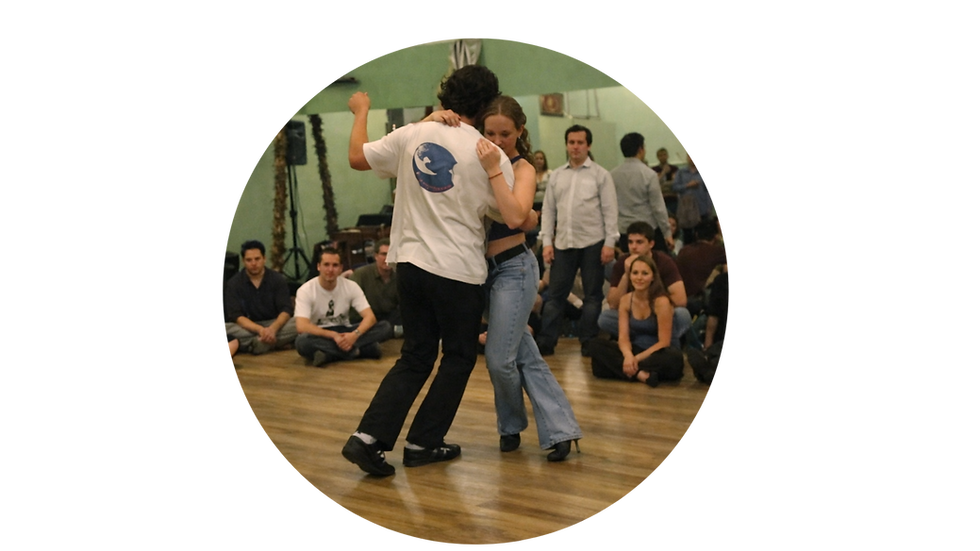
Tango'd Up in Blues
Blues dancing grew from the rich musical traditions of African American communities in the American South. Rooted in Blues music, it carries deep emotion, grounded movement, and a strong connection to rhythm and feeling. Blues dancers draw inspiration from the music’s mood — expressing subtle, personal movement shaped by the sound.
At Sunny City Swing, we teach a Blues/Tango fusion that blends the soulful, improvisational quality of Blues with the elegant walking, connection, and expressive lines of Argentine Tango. The result is a style that feels both grounded and refined — combining Blues’ emotional depth with Tango’s smooth travel and graceful shapes.
-
Grounded, expressive movement inspired by the music’s emotion
-
Elegant Tango‑influenced walking that adds flow and refinement
-
Improvisation and musicality that let dancers shape each moment
Blues/Tango is intimate, expressive, and beautifully adaptable — perfect for slower, soulful songs and for dancers who enjoy a blend of elegance and raw musical feeling.
You can see this evolution in vintage footage — dancers like Shorty George Snowden and Little Bea moving from closed Charleston into the breakaway, one of the earliest moments where Lindy Hop begins to emerge.
Watch the clip: